In one minute
- Teardown's world is made of voxels about 10 cm across, so walls are built from thousands of breakable pieces.
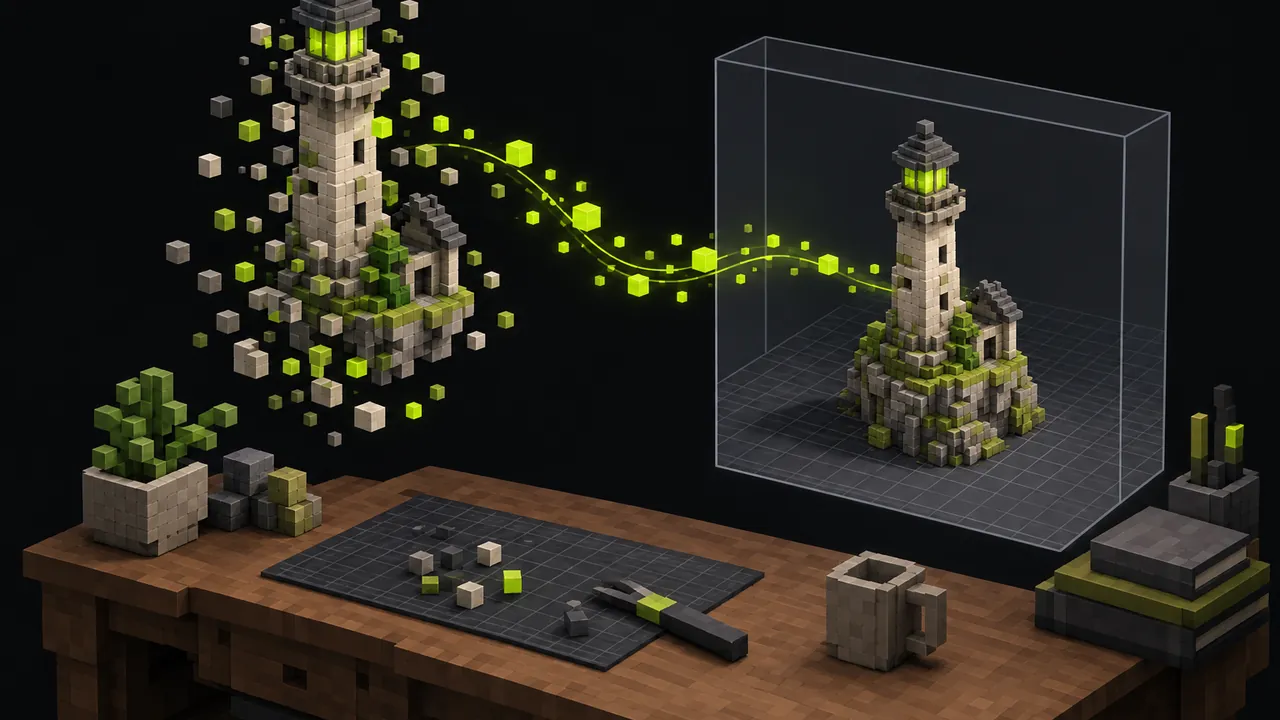
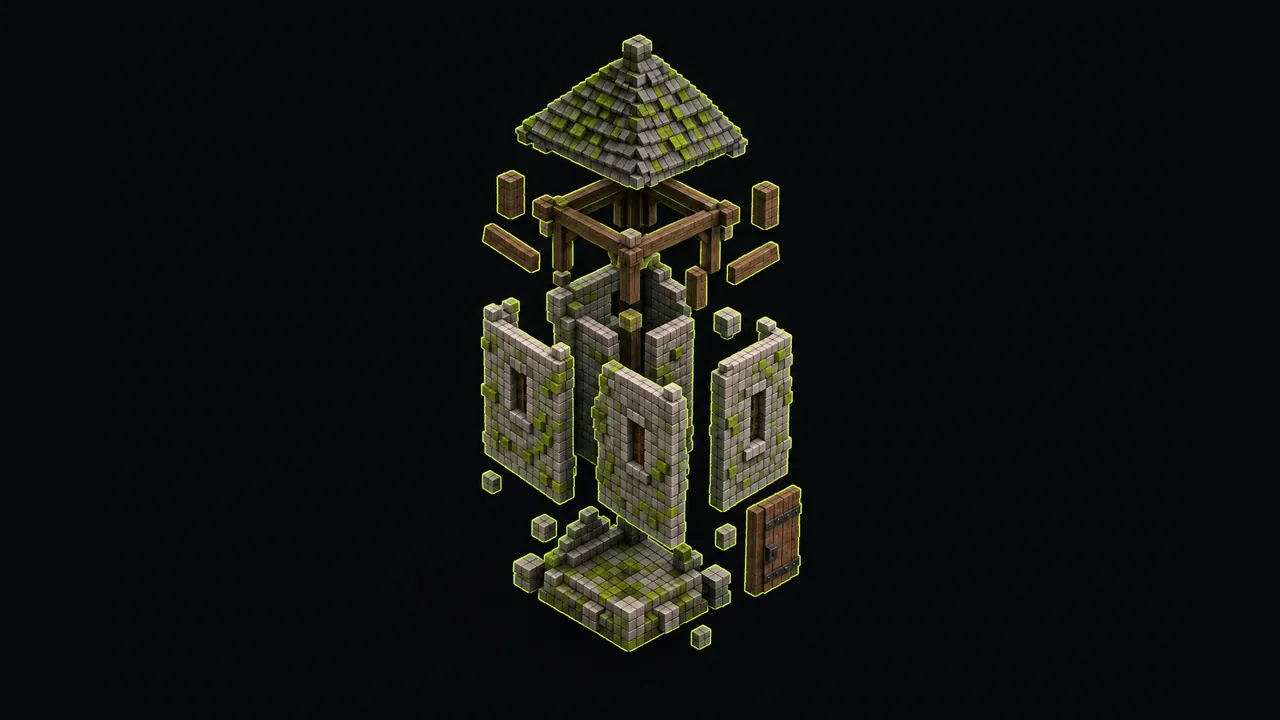
- Instead of one giant grid, the world is thousands of small voxel objects, each of which can move and rotate freely.
- The game draws those voxels directly rather than turning them into triangles, and uses ray tracing for its soft shadows and lighting.
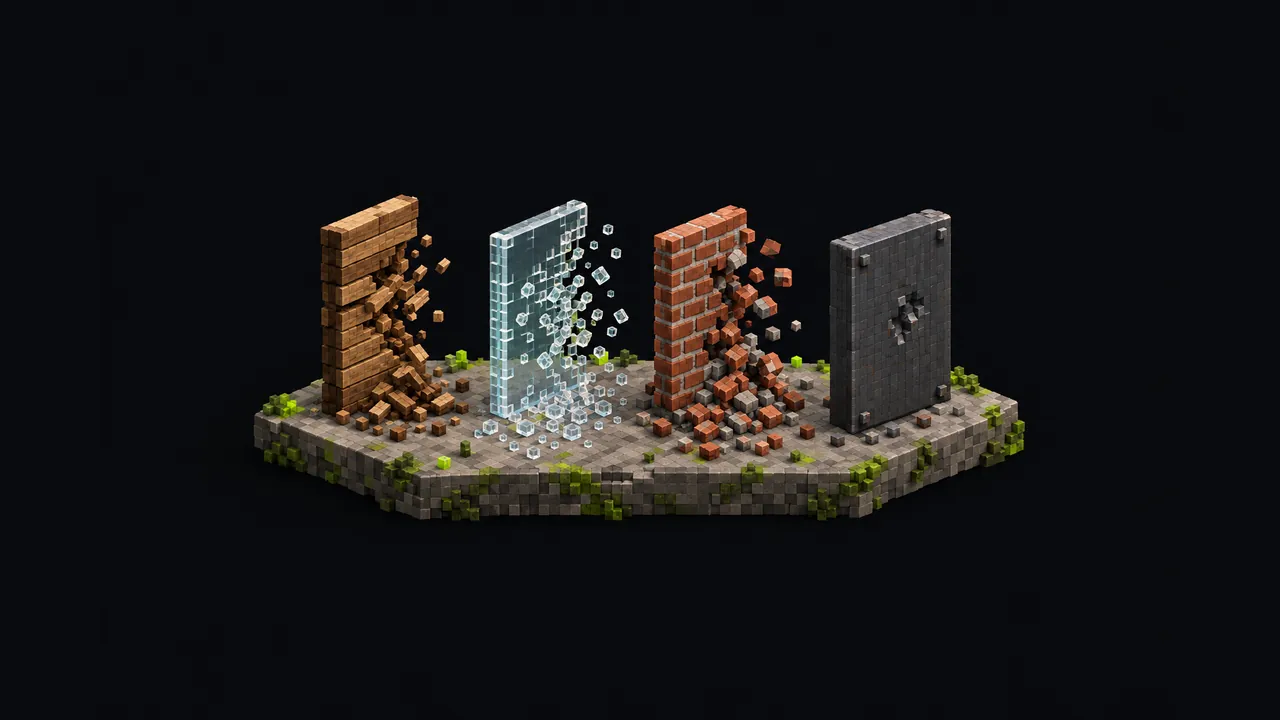
- Every voxel has a material, which decides how it breaks, burns and sounds.
Small voxels, not blocks
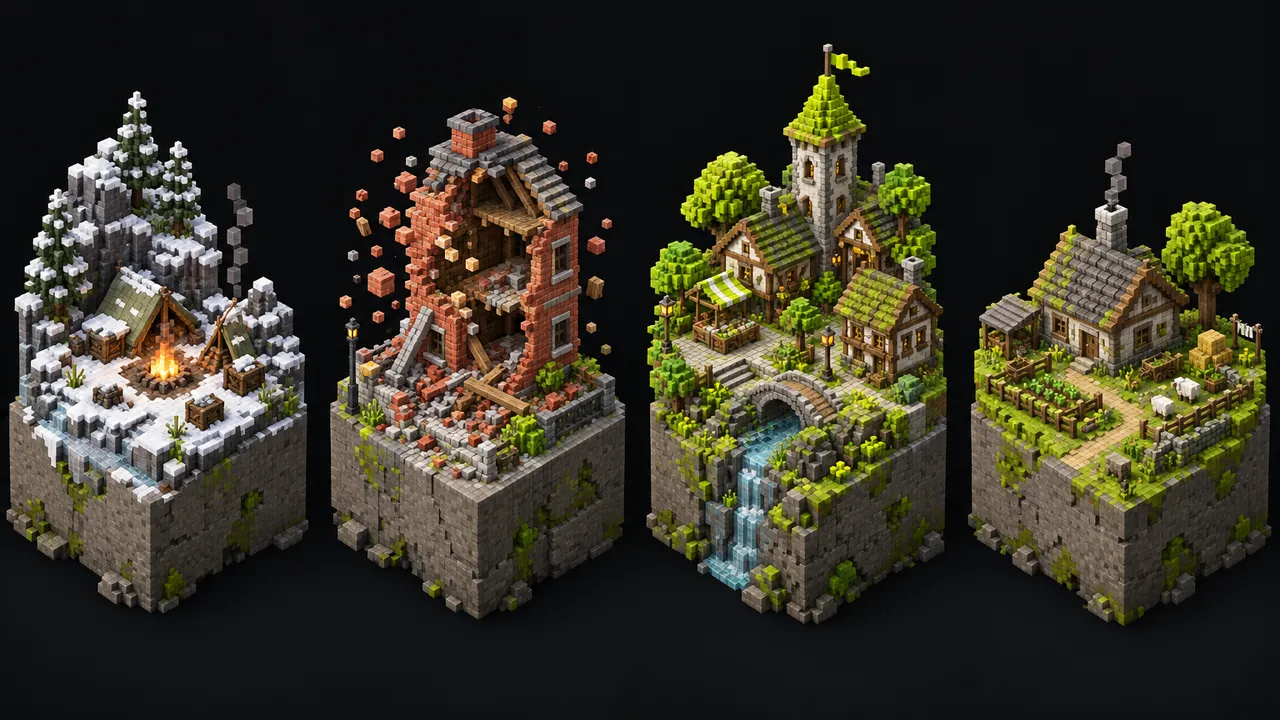
Teardown, from Swedish studio Tuxedo Labs, is a voxel game, but not in the way Minecraft is. Minecraft's blocks are about a metre wide and you change the world one block at a time. Teardown's voxels are about ten centimetres wide, which is small enough that a single wall can be made of thousands of them.
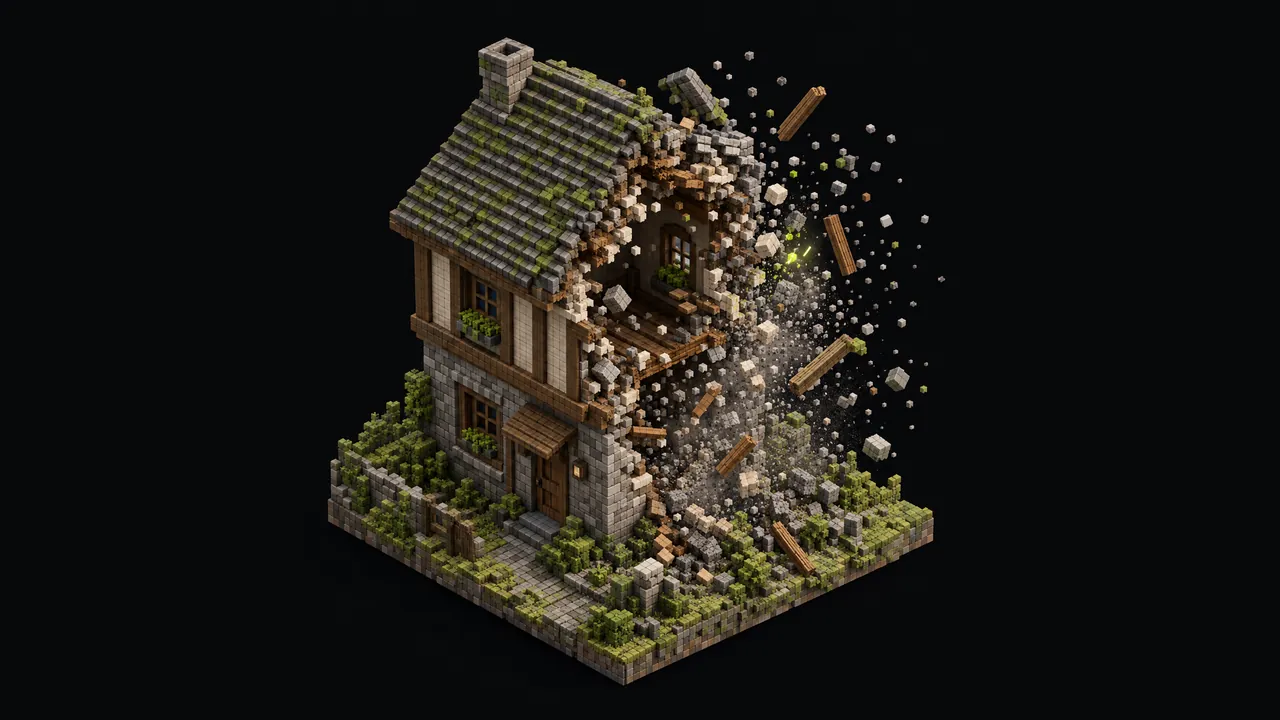
That scale is what makes destruction feel physical. When you hit a wall with a sledgehammer, a handful of voxels break away. When you ram it with a truck, the voxels in the truck's path are removed and the hole matches the truck. Nothing is pre-broken or scripted. Our explainer on what a voxel game is covers the difference between block games and fine voxel games in more depth.
| Typical block game | Teardown | |
|---|---|---|
| Voxel size | About 1 metre | About 10 centimetres |
| World layout | One huge grid, in chunks | Thousands of separate voxel objects |
| Rendering | Voxels turned into textured triangles | Voxels drawn directly, with ray-traced lighting |
| Physics | Mostly static blocks | Loose pieces fall, roll and collide |
| World size | Effectively endless | Compact handmade levels |
Thousands of little worlds
The clever part is how the world is organised. Tuxedo Labs co-founder Dennis Gustafsson has explained that the game doesn't use one enormous volume of voxels. It uses thousands of smaller volumes instead. Each one is a neat, straight grid on the inside, but the volumes themselves can sit at any angle and move independently.
A safe you drag across a room is one volume. The debris it knocks off a wall becomes new, separate volumes. When you cut a beam in half, the game splits one object into two, and each half becomes its own physics body that can fall, tumble and land on something else.
This is why Teardown can have tilted roofs, swinging doors and collapsing towers without everything snapping to a single world grid. It's also why loose debris piles up so convincingly.
Physics on the processor, pictures on the graphics card
Collisions in Teardown are worked out voxel against voxel on the CPU. When two objects touch, the game checks where their voxels overlap and pushes them apart. That's more work than colliding simple boxes, but it means a car really does catch on the exact edge of a broken wall.
Rendering happens on the GPU, and it's unusual. Almost every 3D game, including most voxel games, ends up drawing triangles. Gustafsson has said there are essentially no triangles in Teardown, apart from water surfaces and power lines. For each object, the game draws a simple box on screen and then steps a ray through that object's voxel grid to find which voxel you're looking at, and what material it is.
Why the lighting looks so good
Teardown's soft shadows, ambient occlusion and the way light pools in corners come from ray tracing. Because the world is already a set of voxel grids, tracing rays through it is much cheaper than it would be through a scene of millions of triangles. The game keeps a separate, simplified voxel structure just for this lighting work.
It doesn't need an RTX card. According to the official FAQ, ray tracing is built into the renderer and can't be turned off, and the game needs an OpenGL 4.5 graphics card with at least 3 GB of video memory. Reflections use a cheaper screen-space technique for performance.
Materials decide how things break
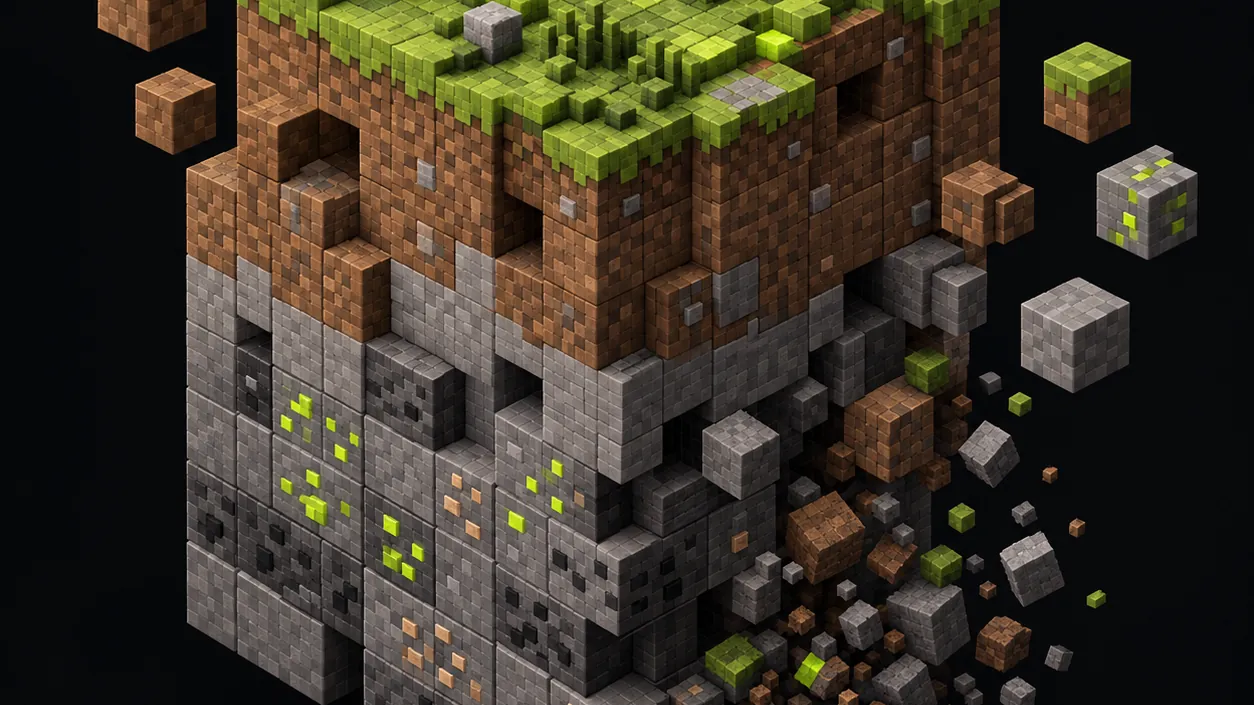
Each object has a palette of materials, and every voxel points to one of them. Material decides behaviour: wood splinters and burns, glass shatters, metal holds out against all but the strongest tools, masonry crumbles, foliage and dirt give way easily. Sound follows material too, which is why smashing a window and breaking a brick wall feel so different in your ears.
It also shapes the puzzles. Some walls fold under a hammer, while others need explosives or a heavy vehicle. Choosing the route through a building is really a question of which materials stand in the way.
How destruction became a game
A world where you can break anything has a design problem: why not just smash a straight line to the goal? Gustafsson has said that early sandbox prototypes ran into exactly this. You can't stop the player with walls and doors when every wall and door can be destroyed.
The answer was the heist. In many campaign missions you get unlimited time to prepare, cutting holes, stacking crates as ramps and parking vehicles where you'll need them. Then you grab the first target, the alarm goes off, and you have a short countdown to collect the rest and escape. The fun is in planning a route that you built yourself.
The trade-offs
- Smaller levels. Every voxel is breakable and simulated, so worlds are compact and handmade rather than endless.
- Heavier hardware needs. Big explosions with lots of debris can still push a PC hard.
- Multiplayer was hard. Keeping destruction identical on every player's screen took years of work. Online multiplayer for up to 12 players launched on PC in March 2026 and on PS5 and Xbox Series X|S in September 2026, without crossplay.
Want to build in the same style?
Teardown's levels and mods use MagicaVoxel's .vox format, so the same free editor many indie artists use is a way into Teardown modding. Our roundup of free voxel editors is a good starting point, and our guide to getting MagicaVoxel models into Godot covers using that art in your own projects. If you'd rather just play, Teardown appears in our guide to games like Minecraft.
For the technical background in Gustafsson's own words, Game Developer's write-up of how voxels shaped Teardown's heist design is worth reading.
Frequently asked questions
How big is a voxel in Teardown?
About 10 centimetres on each side. A one-metre block in Minecraft would be a thousand of Teardown's voxels.
Does Teardown need an RTX graphics card?
No. Ray tracing is part of its voxel renderer and can't be switched off, but it doesn't need dedicated RTX hardware. The official FAQ lists an OpenGL 4.5 card with at least 3 GB of video memory, and Intel integrated graphics aren't supported.
Is Teardown on consoles?
Yes. It's on PC through Steam and on PS5 and Xbox Series X|S. Online multiplayer for up to 12 players reached PC in March 2026 and consoles in September 2026, with no crossplay between platforms.
Why are Teardown's levels small?
Simulating and drawing millions of tiny breakable voxels is expensive. Handmade, compact levels keep that cost manageable while leaving every surface destructible.
Facts in this article were checked against developer and store sources on 10 October 2026. Prices, versions and dates change, so confirm on the official page before you buy.