Daily Knap in short
- One new stone every day, the same for every player.
- Strike the plain stone and keep the outlined tool intact.
- Anything cut off from the tool falls away for free.
- Finish in as few strikes as you can, then share your result.
Why a knapping puzzle
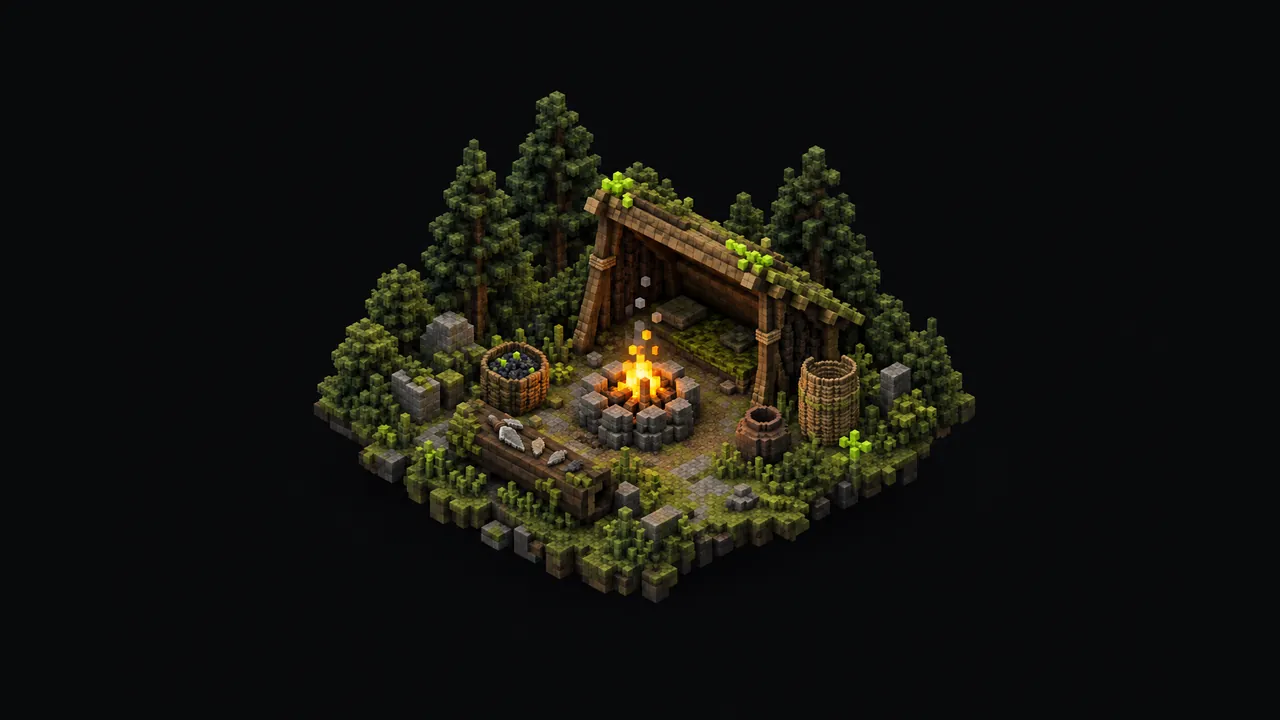
Knapping is one of the oldest crafts there is: shaping a tool by striking flakes off a stone. Block games have borrowed it in a fun way. In our Vintage Story beginner guide it's the first thing you do, chipping a knife or an axe head out of a grid of voxels one click at a time.
That grid already works like a small puzzle. Some clicks remove a single voxel. Others cut off a whole corner, which drops away at once. Daily Knap takes that one idea and turns it into a short daily challenge you can finish in a minute or two.
How to play
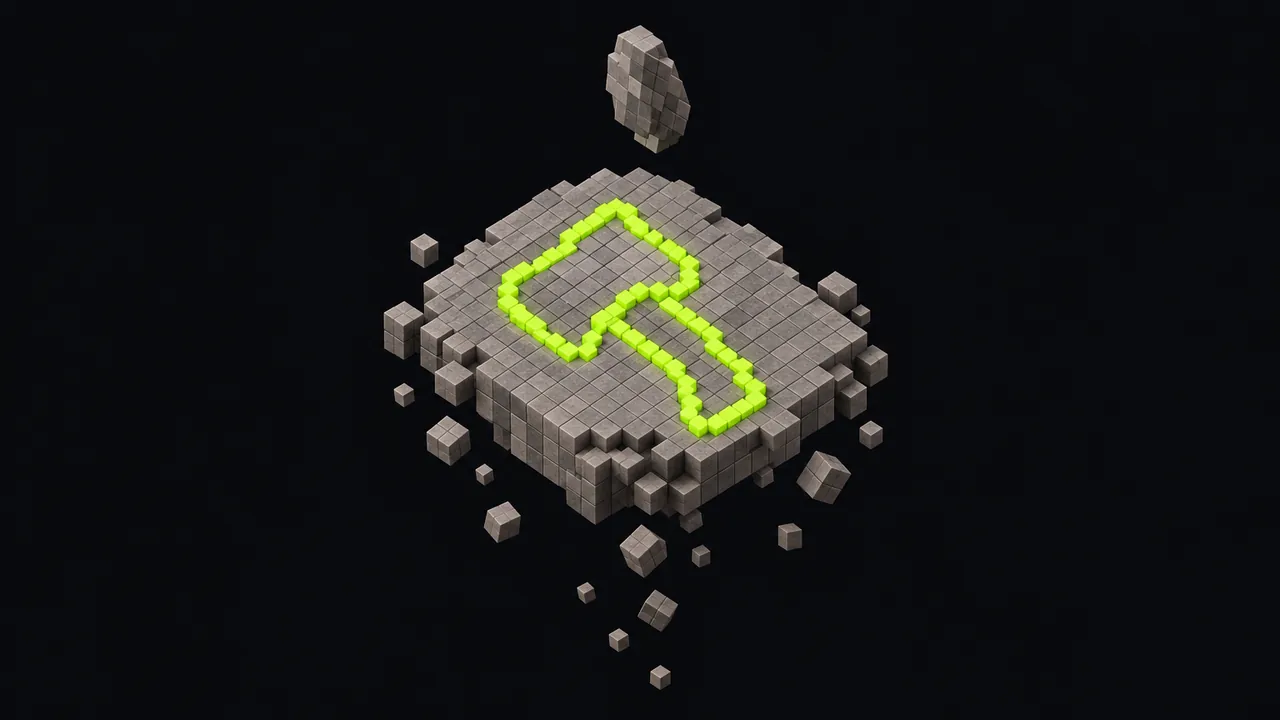
- Open Daily Knap. You'll see a 10 by 10 slab of stone.
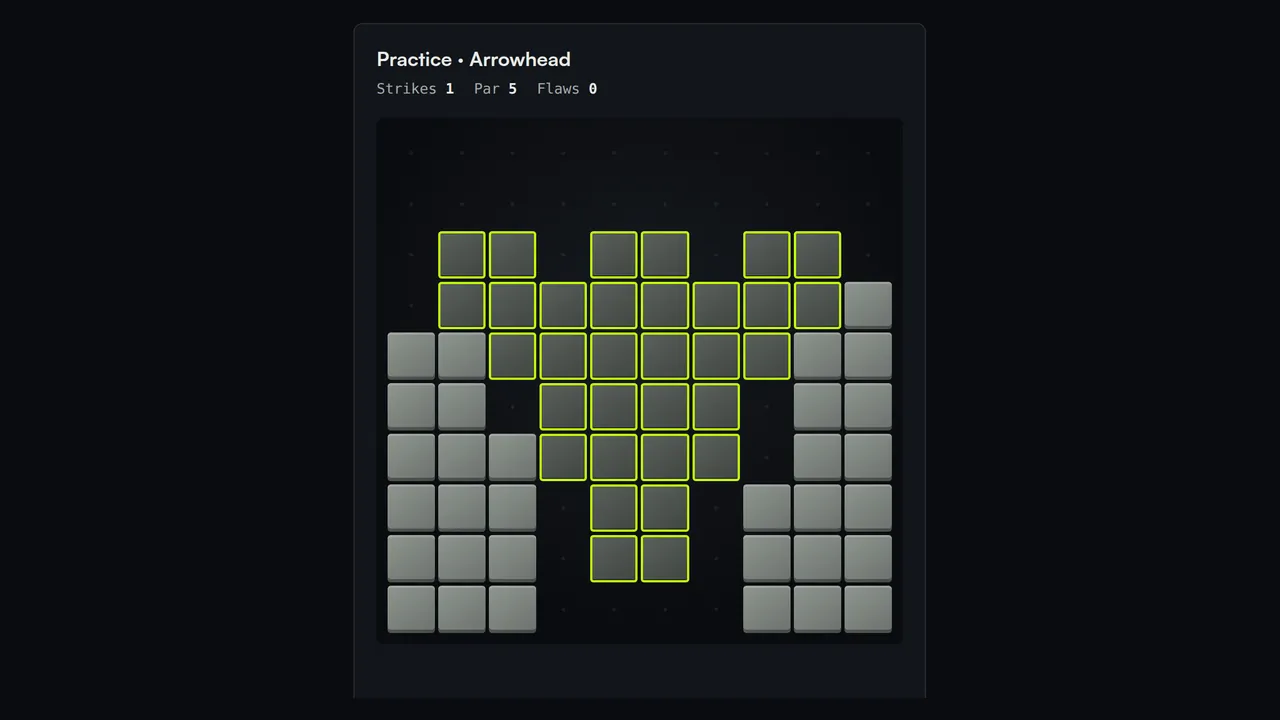
- The pieces with a bright outline form today's tool. Leave those alone.
- Tap or click any plain grey piece to strike it off.
- If a strike leaves part of the slab no longer touching the tool, that part falls away too.
- Keep going until only the tool is left. The puzzle ends there.
The tool changes every day. You might get an axe head, a knife blade, a spear head, an arrowhead, a chisel or a hammer head, and the shape can be flipped or moved around the slab, so a familiar tool won't always play the same way.
On a keyboard, use the arrow keys to move around the slab and Enter or Space to strike.
Strikes, par and flaws
| Term | What it means |
|---|---|
| Strikes | How many times you hit the stone. Fewer is better. |
| Par | The lowest strike count our solver found for today's stone. Match it or beat it. |
| Flaws | Tool pieces you knocked off. Zero is the goal. |
To stop a stray tap from ruining your run, hitting a tool piece only arms it the first time. You need to hit it again to break it. Each lost tool piece counts as one flaw, including any part of the tool that falls away because you split it.
A run with no flaws at or under par is as good as it gets. Your stats panel keeps track of games played, your current and best streak, clean runs and runs at or under par.
Sharing your result
When you finish, Daily Knap writes a short result you can paste into a chat or a post. It shows the puzzle number, the tool, your strikes against par, your flaws and a row of coloured squares, one per strike:
| Square | Meaning |
|---|---|
| Green | The strike removed four or more pieces |
| Yellow | Two or three pieces |
| White | A single piece |
| Red | A flaw in the tool |
The squares show how you played without giving away the shape, so you can share it before your friends have had their go.
Tips for lower scores
- Look for necks. A narrow strip of stone joining a big chunk to the rest of the slab is the best target on the board. Cut it and the whole chunk drops.
- Work from the outside in. Pieces right next to the tool usually have to go one at a time, so save them for last and clear the big lumps first.
- Count before you strike. Ask which piece, if removed, would leave the most stone stranded. That's usually your next move.
- Use practice stones. The Practice button gives you a random stone that doesn't touch your stats, which is a good way to learn the patterns.
Privacy and saving
Daily Knap needs no account. Your moves for the day, your streak and your stats are stored in your browser's local storage on the device you play on, and the game sends nothing to a server. If you refresh the page mid-puzzle, your stone comes back as you left it.
If you'd like a refresher on the real-world craft, the Wikipedia article on knapping is a good short read. Then go and play today's stone.
Frequently asked questions
Is Daily Knap free?
Yes. It runs in your browser with no account, no download and no ads inside the game.
When does a new puzzle appear?
At midnight in your own time zone. Everyone gets the same stone on the same date.
What does par mean?
Par is the lowest number of strikes our solver found for that day's stone. It is a target, not a hard limit, and a sharp player can sometimes beat it.
What is a flaw?
A flaw is a piece of the tool you knocked off. The game asks you to tap a tool piece twice before it lets you break it, so flaws only happen on purpose or after a second tap.
Where are my stats saved?
In your browser on the device you play on. Clearing site data or switching devices starts your stats again.
Facts in this article were checked against developer and store sources on 13 October 2026. Prices, versions and dates change, so confirm on the official page before you buy.